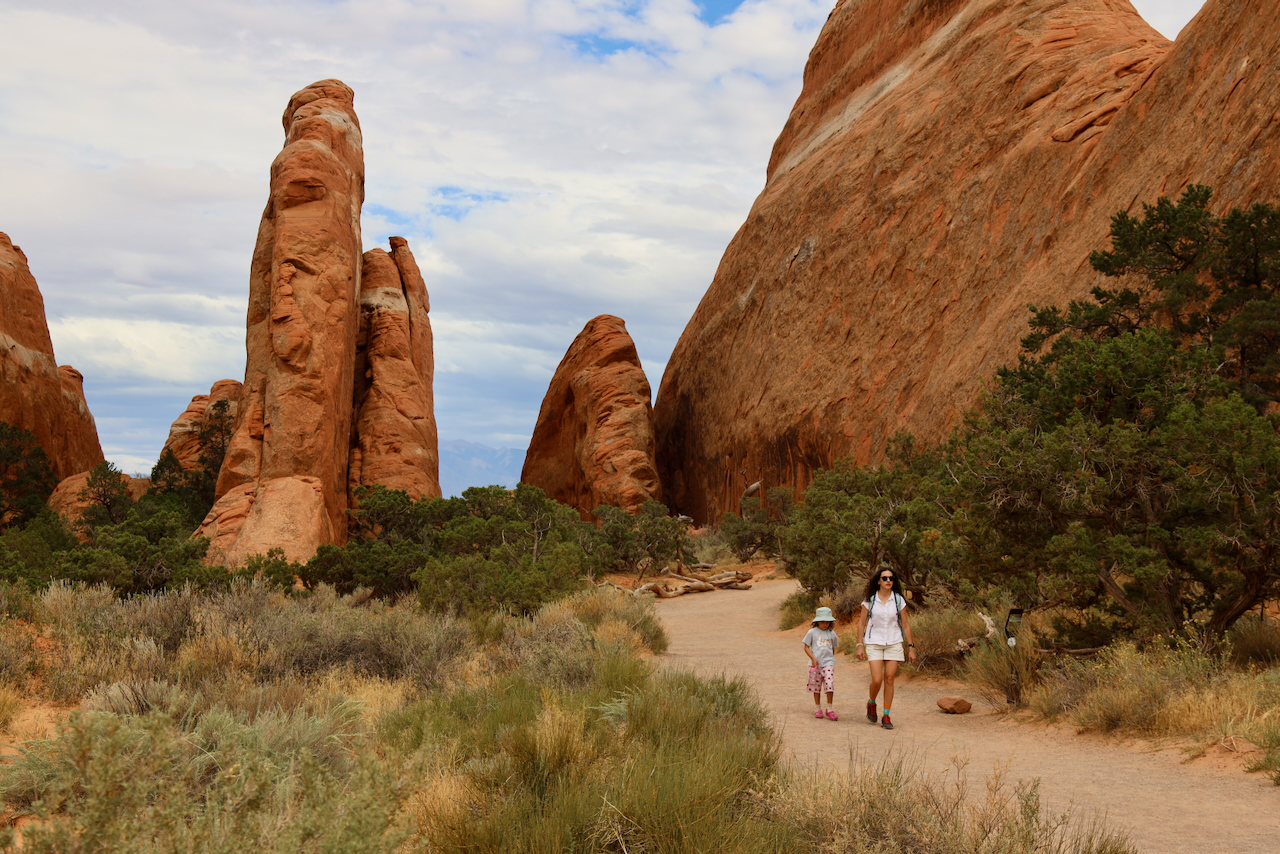
If you’re planning a trip to Moab, Utah with kids, we recently spent three nights here exploring Arches and Canyonlands National Parks. We also stopped to see real dinosaur tracks, stayed in a two-bedroom casita at Hyatt Place Moab, and found some great places to eat.
In this post, I’ll share our 3-night Moab itinerary with kids, including the hikes we did, where we stayed, how to get there, and practical tips for visiting both national parks as a family.
How to Get to Moab, Utah
Moab is located in southeastern Utah, near Arches National Park and Canyonlands National Park. While there is a small regional airport nearby, flying into Salt Lake City is another option, especially if you’re looking for more flight choices.
Here are the main airports to consider:
- Salt Lake City International Airport (SLC): Approximately 3.5–4 hours from Moab.
- Grand Junction Regional Airport (GJT): Approximately 2 hours from Moab.
- Canyonlands Regional Airport (CNY): Approximately 20–25 minutes from downtown Moab, with more limited flight options.
For this trip, we flew into Salt Lake City and rented a car. Since our flight arrived late in the evening, we decided not to drive all the way to Moab that night. Instead, we spent one night in Provo at Hyatt Place Provo, about 45 minutes south of Salt Lake City. We were also able to redeem our Hyatt Category 1-4 Free Night Certificate for this stay, so it all came to $0 out of pocket.

The following morning, we continued toward Moab. The drive from Provo takes approximately three hours without stops. If you’re traveling with kids, I would definitely recommend breaking up the drive rather than trying to get there as quickly as possible.
Day 1: Drive to Moab and See Dinosaur Tracks
One of the coolest things about visiting Moab with kids is that you can actually see dinosaur footprints preserved in rock! On our drive from Provo to Moab, we made two stops to see actual dinosaur footprints!
First, we visited Copper Ridge Dinosaur Tracksite, followed by Mill Canyon Dinosaur Tracksite, both are located just north of Moab, making them easy stops on the way into town.
How to visit Copper Ridge Dinosaur Tracks, Utah
Located approximately 23 miles north of Moab, Copper Ridge Dinosaur Tracks is a great place to see real fossilized footprints. The site contains tracks from both enormous plant-eating dinosaurs and meat-eating dinosaurs that lived during the Jurassic period.
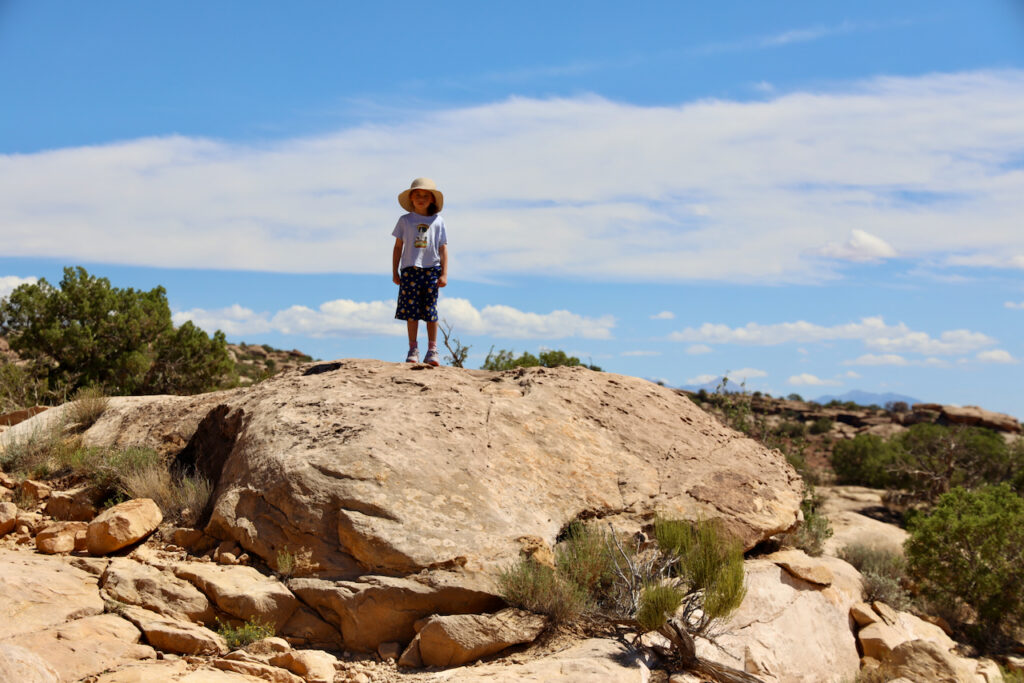
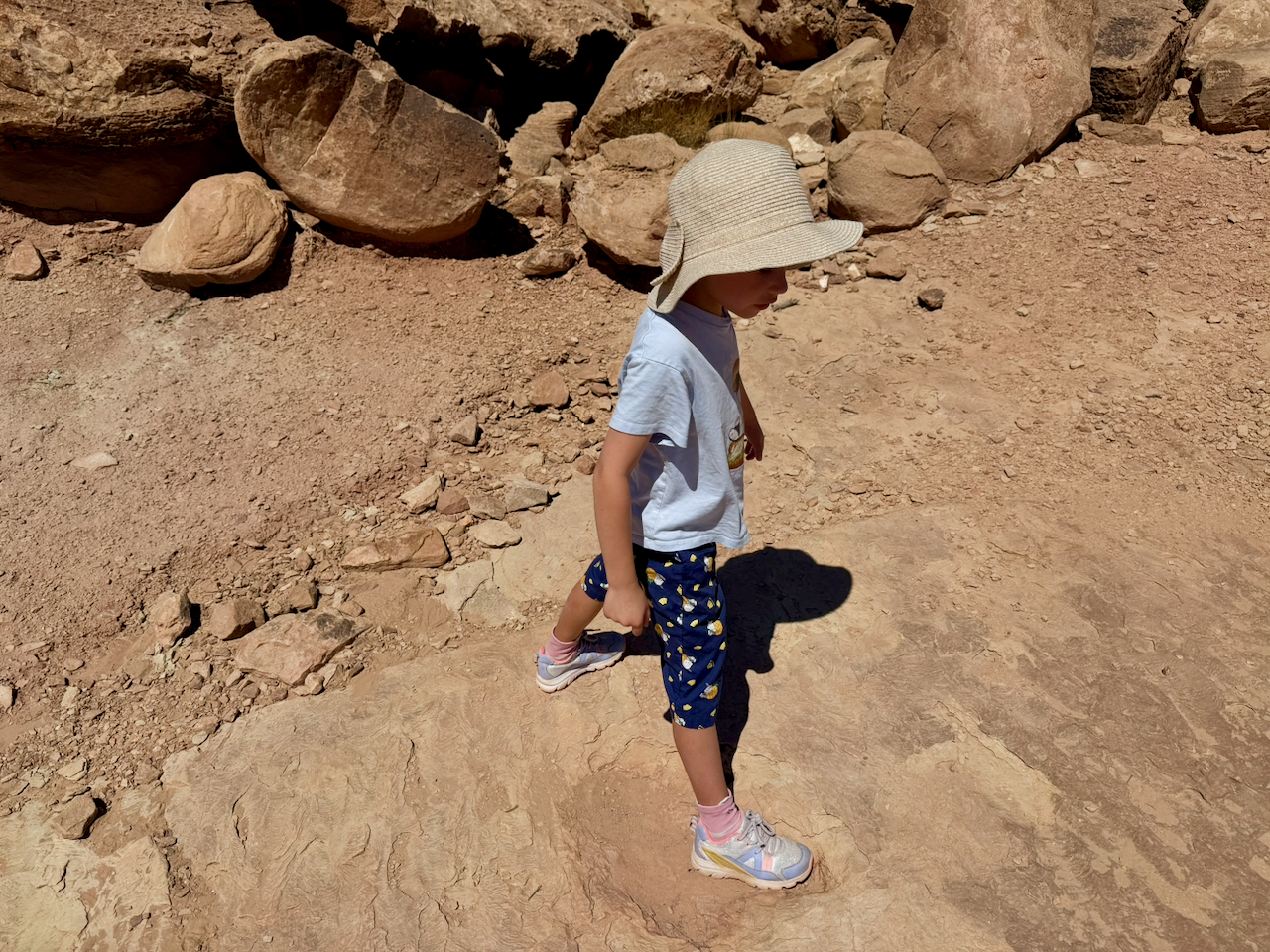
The walk to the tracks is approximately 0.3 miles round-trip, making it a relatively quick stop for families. There are interpretive signs explaining what you’re looking at, although the trail is rocky and involves a little uphill walking.
The access road is unpaved, so check conditions before visiting, particularly after rain.
How to visit Mill Canyon Dinosaur Tracksite, Utah
Another great stop is Mill Canyon Dinosaur Tracksite, approximately 15 miles north of Moab. This site is especially interesting because it preserves more than 200 dinosaur footprints from the Early Cretaceous period.
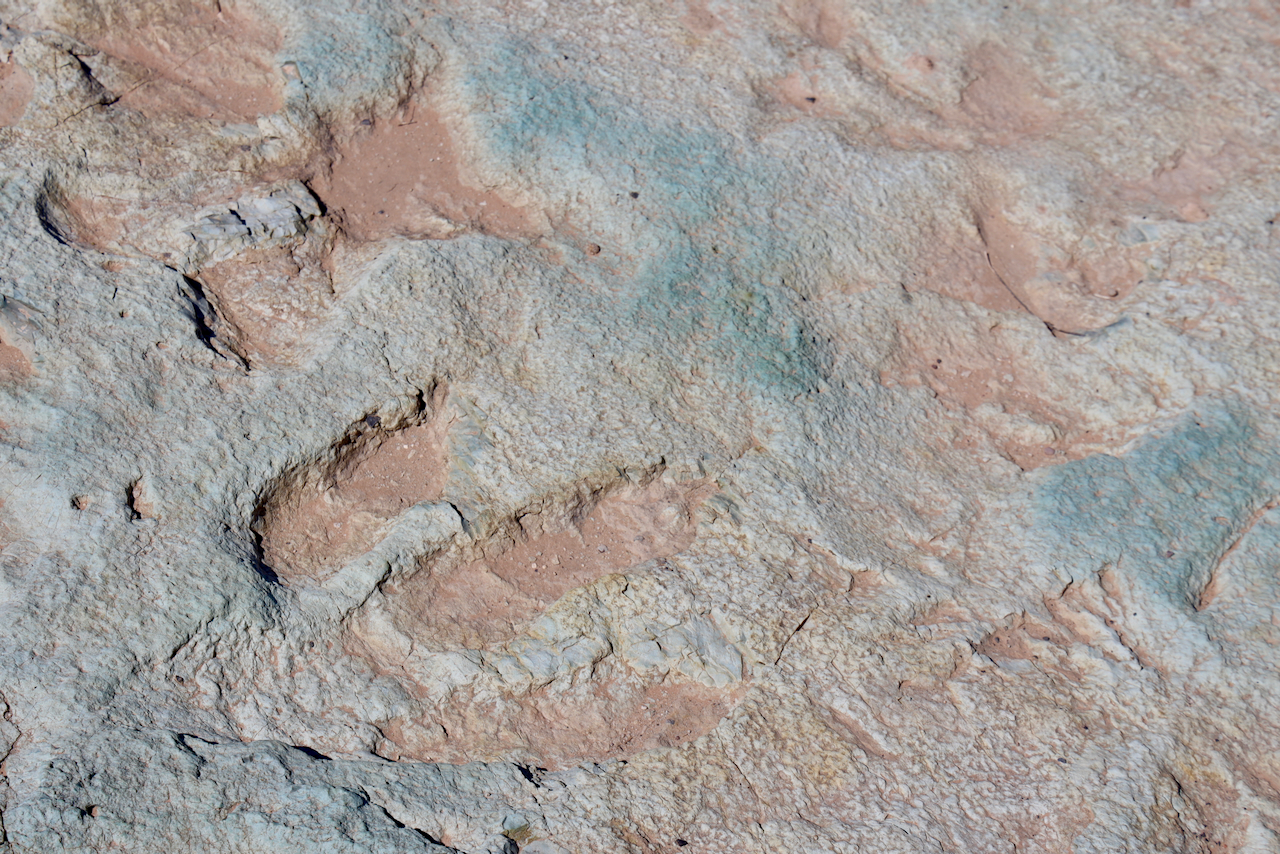
Unlike Copper Ridge, the main tracksite has a boardwalk with interpretive signs, making the footprints easy to view without walking across the fragile fossil surface.
There is also a separate Dinosaur Bone Trail nearby, where you can see fossilized dinosaur bones embedded in rock (this was pretty cool to see). On the way to the trail, we stumbled upon a herd of pronghorns!
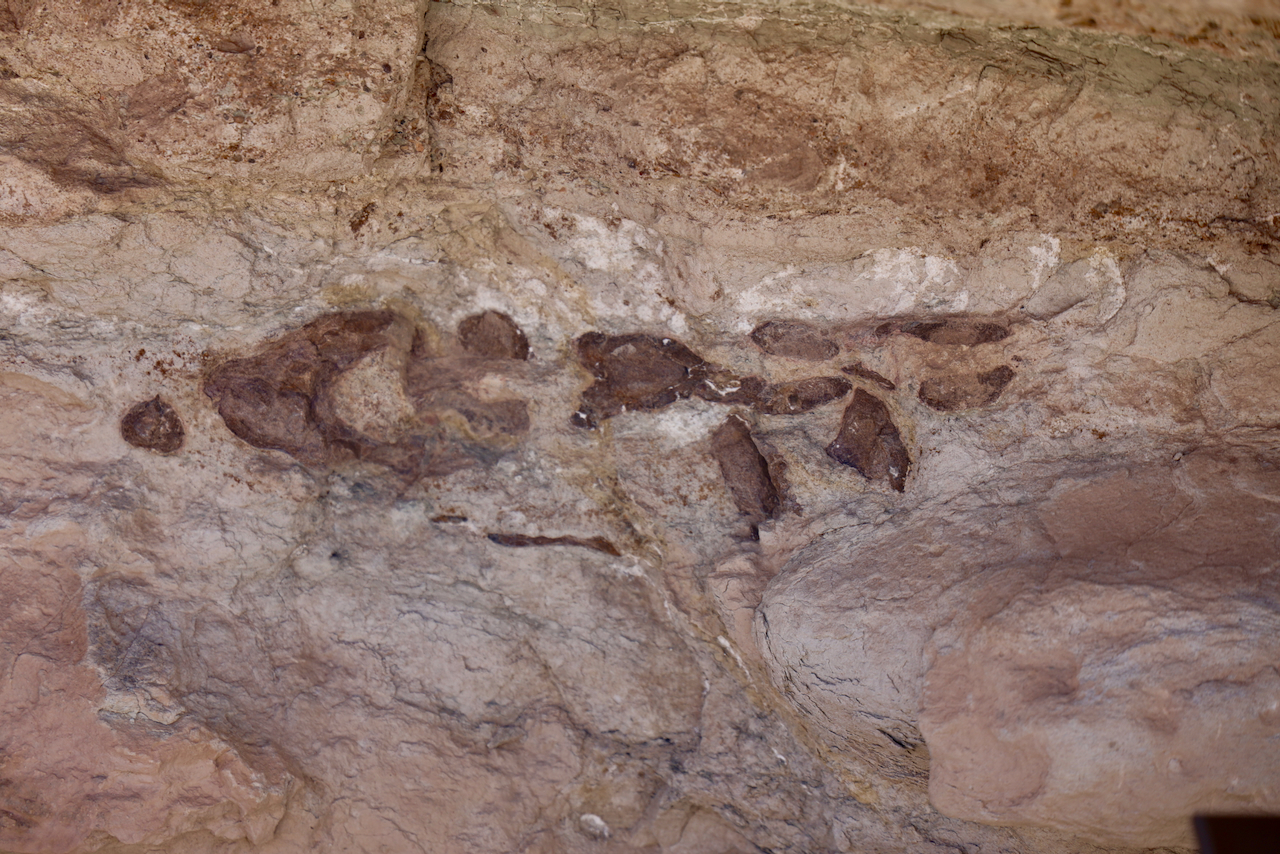
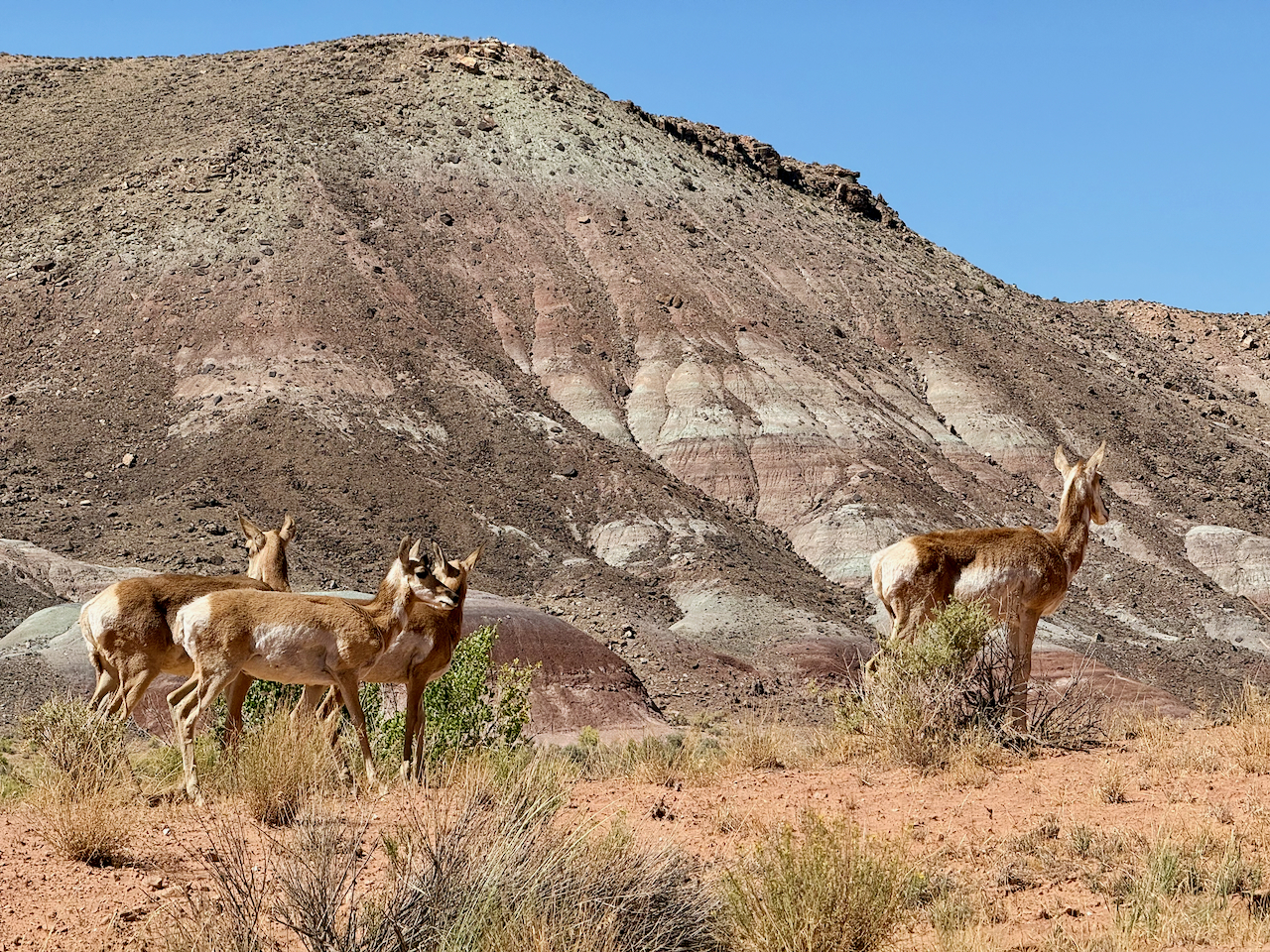
Both sites are free to visit, and they’re great additions to a Moab itinerary if your kids are interested in dinosaurs. After our stops, we continued into Moab and checked into our hotel.
Where to Stay in Moab With Kids: Hyatt Place Moab
For our three-night stay, we chose Hyatt Place Moab, and it turned out to be a great base for exploring the national parks. The hotel is located along North Main Street, approximately five miles from Arches National Park and about a mile from downtown Moab.
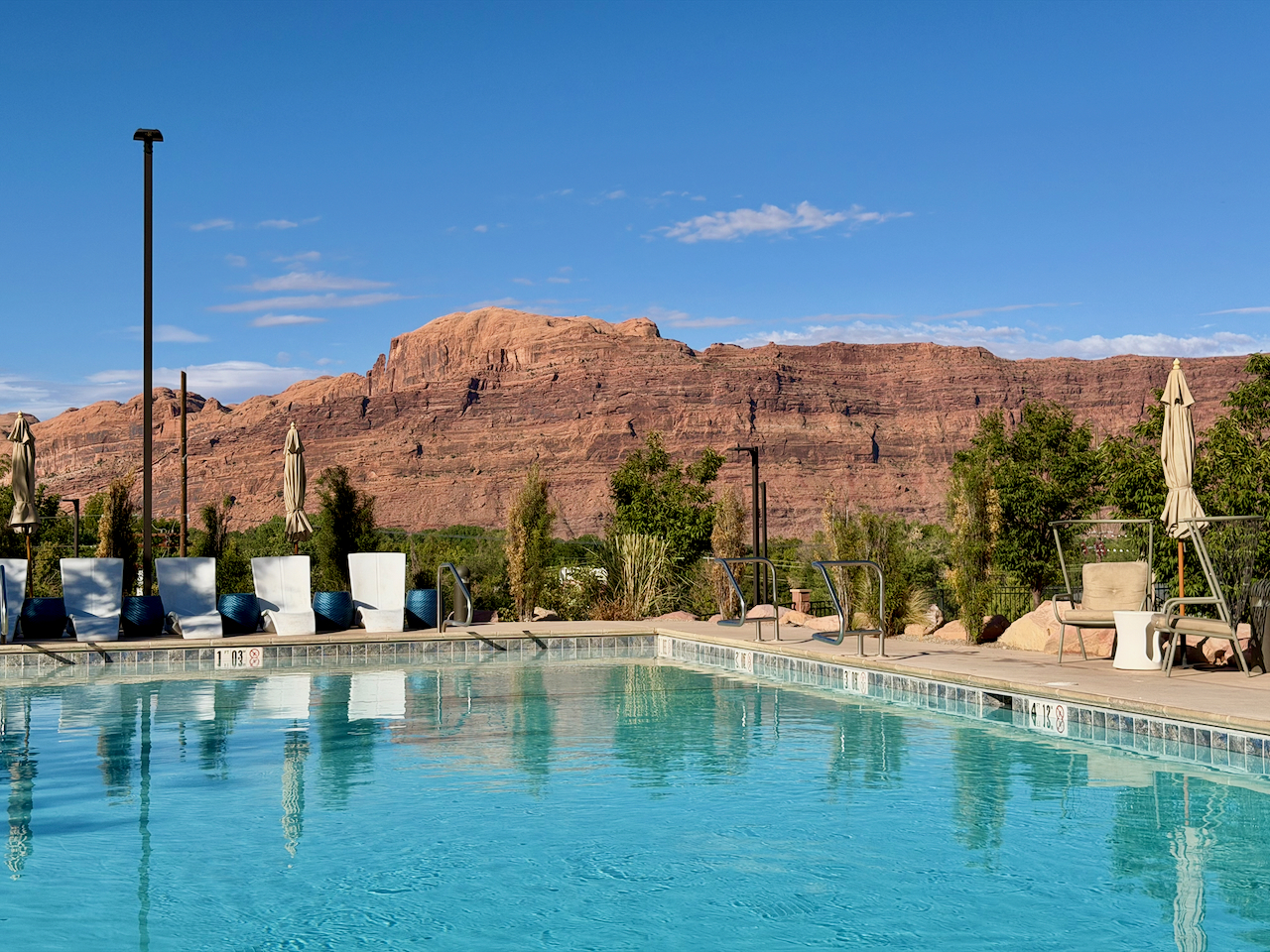
But here’s what makes this Hyatt Place especially interesting for families: it has separate two-bedroom casitas!
Our Two-Bedroom Casita at Hyatt Place Moab
Instead of a regular hotel room, we stayed in one of the property’s two-bedroom casitas, located separately from the main hotel building. This is such a great setup when you’re traveling with kids. Our casita had 841 square feet of space, including:
- One bedroom with a king bed
- A second bedroom with two queen beds
- Two full bathrooms
- A separate living room with a sofa bed
- A full-size refrigerator
- An outdoor patio area
The configuration can accommodate up to six people, making it a particularly good option for larger families or anyone who wants extra space.
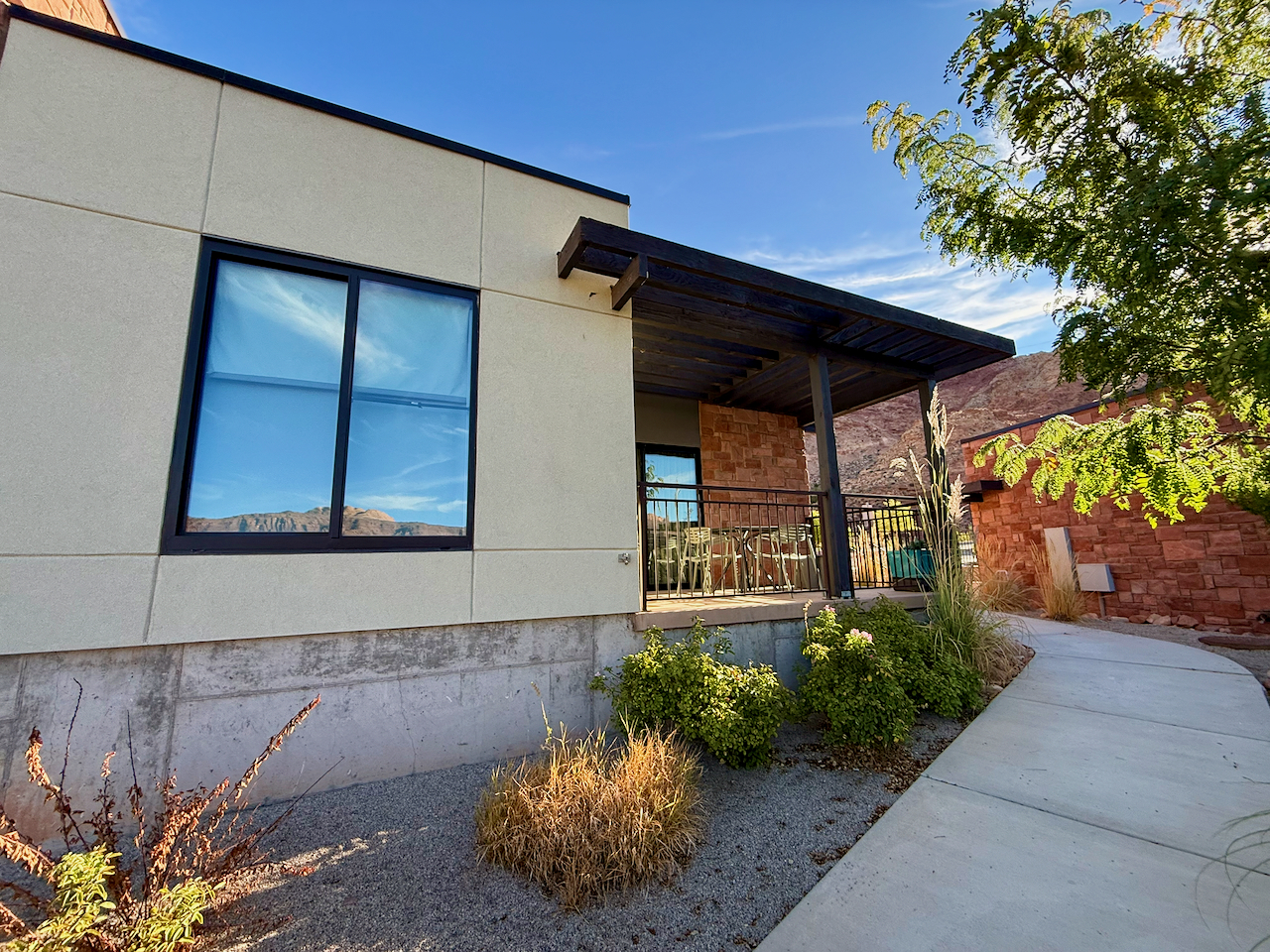
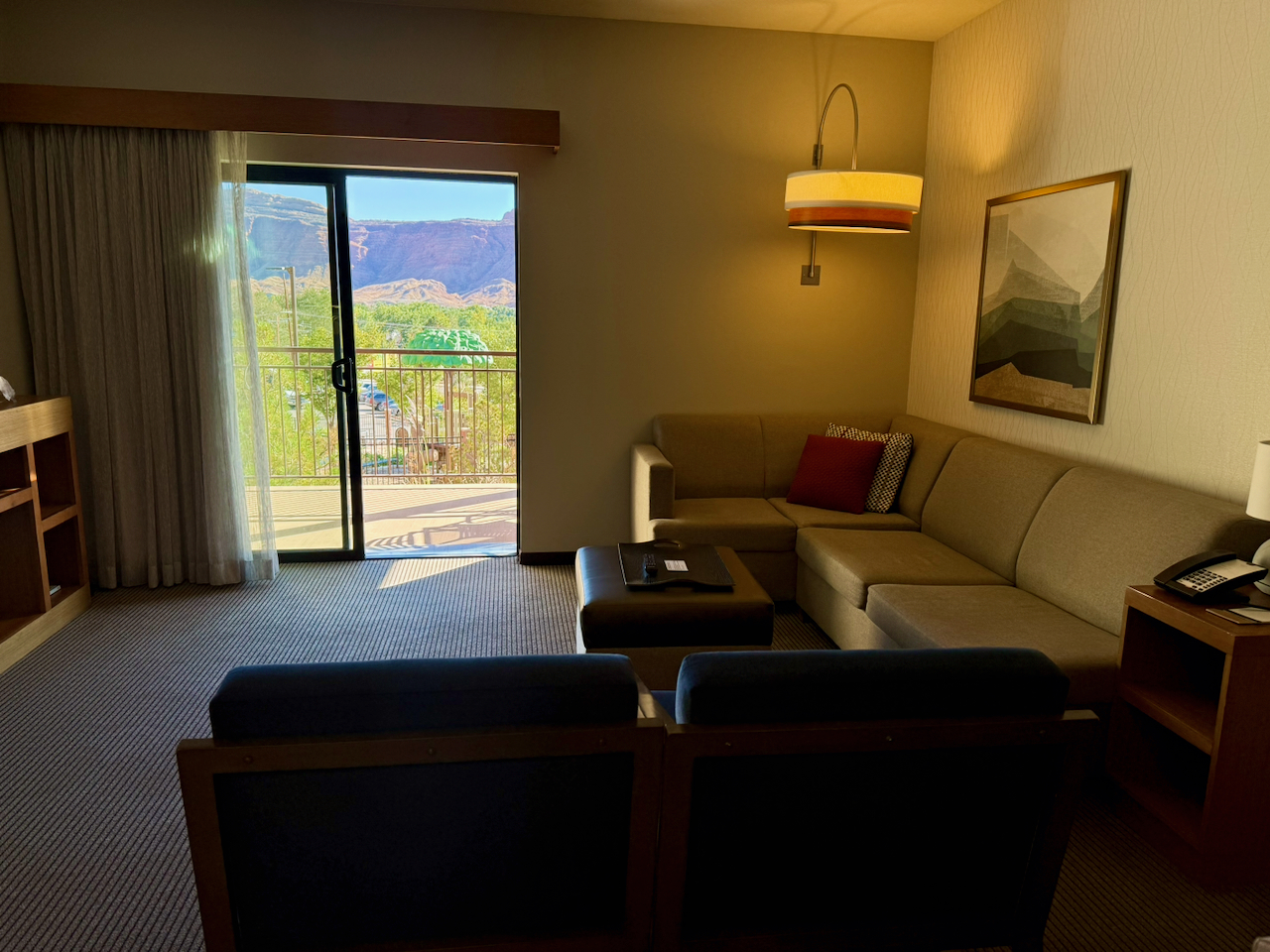
Having two bathrooms and separate bedrooms makes a huge difference when you’re traveling with kids. And the setting is pretty special, too. The casitas sit above the main hotel, surrounded by Moab’s beautiful red-rock scenery.
How to Book a Two-Bedroom Casita at Hyatt Place Moab
Now, here’s the part I know my points-and-miles readers will want to know! You may be able to book a standard room with Hyatt points and then pay to upgrade to a casita. Here’s how I recommend approaching the booking.
First, check standard-room availability at Hyatt Place Moab for your travel dates. You can reserve a room with cash or World of Hyatt points. Next, contact the hotel directly and ask whether a paid upgrade to the Casita | King Bed with Two Queen Beds (plus sofa bed) is available.
The hotel can tell you the additional cost and whether it can confirm the casita for your stay. This is not an automatic World of Hyatt elite upgrade, and a Hyatt Suite Upgrade Award can not be used to confirm this particular room type.
Availability and upgrade pricing depend on the hotel and your dates, so I would arrange everything in advance. Hyatt Place Moab is currently a Category 5 World of Hyatt hotel, with standard-room award prices ranging from 15,000 to 35,000 Hyatt points per night under the current award chart.
You can earn Hyatt points through World of Hyatt credit cards or by transferring eligible Chase Ultimate Rewards points. Just remember that Chase-to-Hyatt transfer ratios now depend on which Chase card you hold.
Hyatt Place Moab Amenities
Beyond the casitas, Hyatt Place Moab offers several amenities that make it a good family hotel. There is complimentary breakfast, free parking, an outdoor pool, a hot tub, and a children’s splash pad.
And when you’re planning early starts at the national parks, having breakfast included is especially convenient. The location was another big advantage for us. We could easily head to Arches in the morning, drive into downtown Moab for dinner, and return to our casita after a long day outside.
Day 2: Arches National Park With Kids
Our first full day in Moab was dedicated to Arches National Park, one of Utah’s most famous national parks and home to more than 2,000 natural stone arches.
One of the things I liked about visiting Arches with kids is that you can combine a few longer hikes with very short walks and scenic stops. You don’t need to hike for hours at every location to experience some incredible scenery.
Grab Sandwiches at Coyote’s Outpost Before Entering Arches
Before heading into the park, we stopped at Coyote’s Outpost, located practically next to our hotel at 805 North Main Street. This is such a convenient little spot if you’re staying at Hyatt Place Moab!
They have grab-and-go sandwiches, breakfast burritos, snacks, coffee, drinks, and other essentials (they also offer free frozen water bottles from the chest outside!). We picked up sandwiches to bring into the park for lunch, and I would absolutely recommend doing the same.
There are no restaurants inside Arches National Park, so it’s important to bring your own food, snacks, and plenty of water. You can also order sandwiches ahead through Coyote’s Outpost. Check opening hours, as the shop is currently closed on Tuesdays.
Start at Arches Visitor Center: Junior Ranger Program
Our first stop was the Arches Visitor Center. If you’re visiting Arches National Park with kids, don’t skip the Junior Ranger Program! You can pick up a free Junior Ranger activity booklet at the visitor center. The activities encourage kids to observe the landscape, learn about geology, and discover the plants and animals that live in the park.
Once the required activities are completed, kids can earn a Junior Ranger badge.
It’s a fun way to make the day more interactive, especially when you’re visiting several different viewpoints and hiking trails. You can also fill your water bottles and ask the park rangers about current trail conditions.
Delicate Arch Hike, Arches National Park
Of course, one of the main reasons we wanted to visit Arches National Park was to see the famous Delicate Arch! This is probably the most recognizable landmark in Utah, and it’s even featured on the state’s license plates.
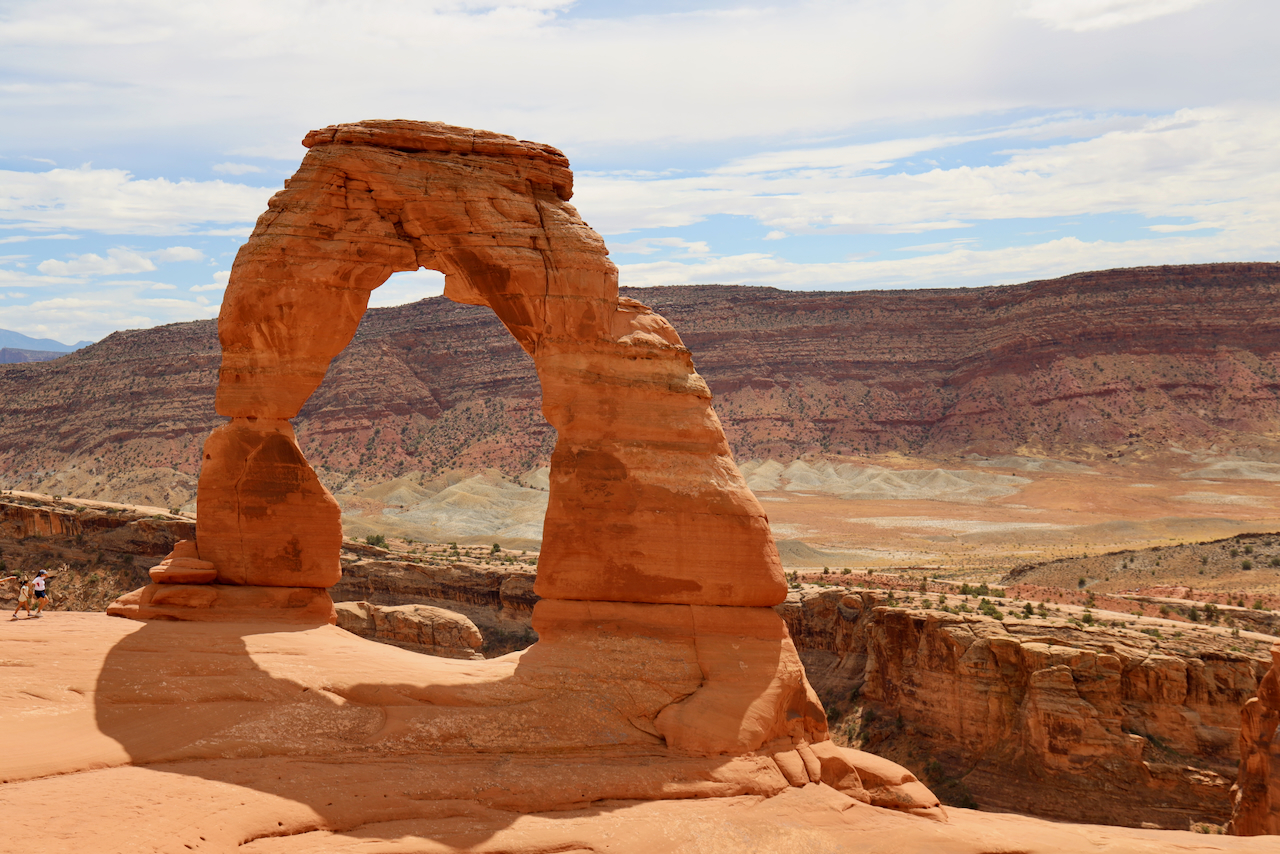
The hike starts near Wolfe Ranch and climbs across exposed slickrock before reaching the famous freestanding arch.
Unlike some of the other hikes in Arches, you cannot see Delicate Arch from the beginning of the trail. You have to work for that view! The trail has a significant uphill section, very little shade, and a narrow rock ledge near the end.
For families with kids, I recommend starting early, bringing plenty of water, and allowing extra time for breaks. Younger children who are comfortable hiking may be able to complete it, but this is not an easy stroll.
If a three-mile hike is too much for your family, you can drive to the Delicate Arch Viewpoint area instead. The lower viewpoint involves just a short walk, although the arch is much farther away.
Wolfe Ranch Petroglyphs
Near the Delicate Arch trailhead, there is another interesting stop that’s easy to miss: the Wolfe Ranch Petroglyph Panel.
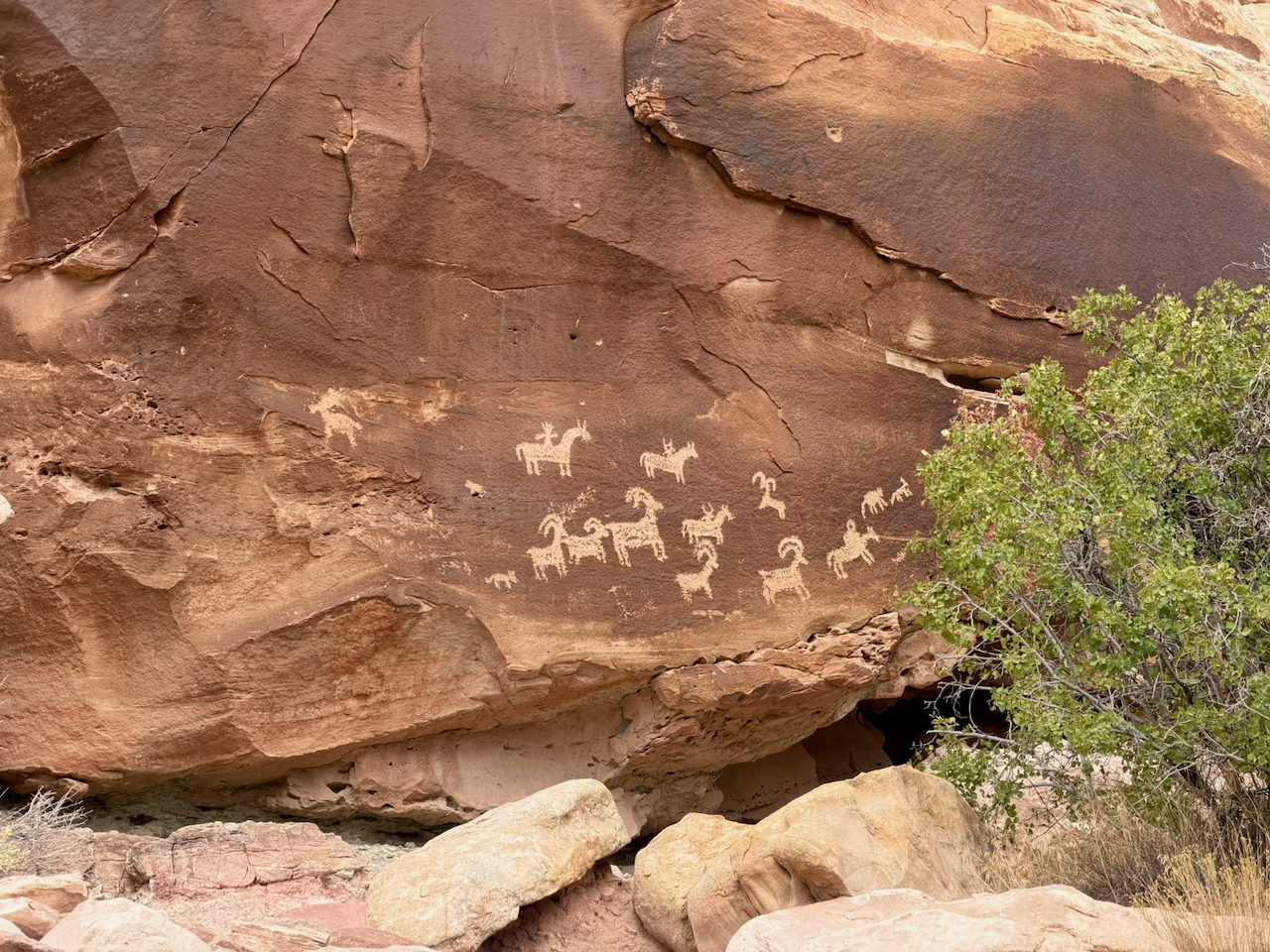
A short path leads to a rock wall featuring petroglyphs created by the Ute people. It’s a fascinating opportunity to learn about the human history of the area, beyond the national park’s famous geological formations. Make sure to stay on the designated path and avoid touching the rock art.
Park Avenue Trail, Arches National Park
Another hike we did was the Park Avenue Trail, located near the beginning of the Arches scenic drive. Unlike Delicate Arch, this trail isn’t about reaching a single famous landmark.
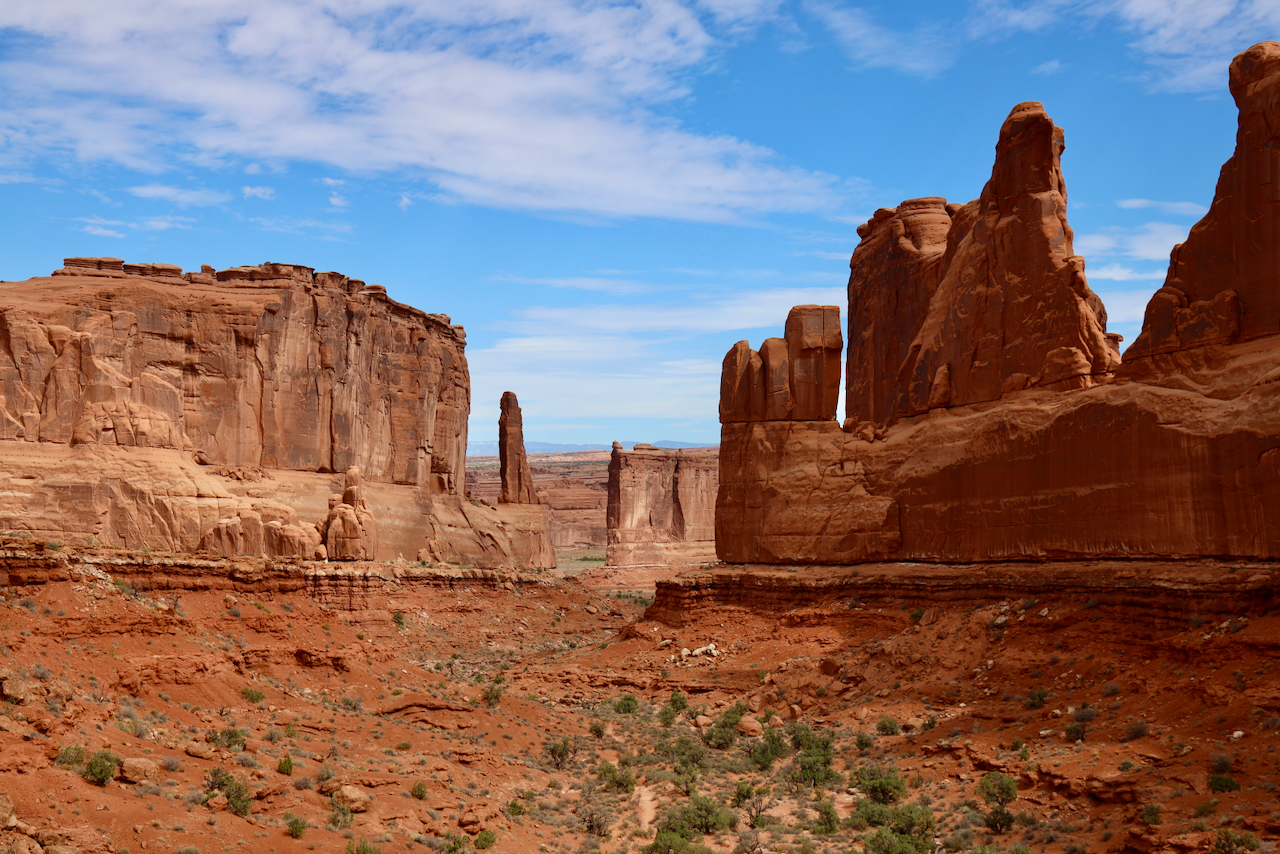
Instead, you walk between enormous sandstone walls and towering rock formations that almost resemble skyscrapers. It’s such a different landscape from the arches themselves!
The trail runs between the Park Avenue and Courthouse Towers areas, so you can either hike the full route and return the same way or arrange a pickup at the opposite trailhead.
If you’re short on time, you can still get a beautiful view from the Park Avenue Viewpoint without completing the hike.
Balanced Rock, Arches National Park
Next, we stopped at Balanced Rock, another iconic formation in Arches National Park. This enormous sandstone boulder appears to be balancing on top of a much narrower rock pedestal.
You can see it from the road, but there’s also a short loop trail that takes you around the base. This is one of the easiest stops in the park, making it perfect for families with younger kids or anyone wanting a break between longer hikes.
The Windows Section, Arches National Park
We also explored the Windows Section, one of the most accessible areas of Arches National Park. Here you can see several impressive natural arches, including North Window, South Window, and Turret Arch.
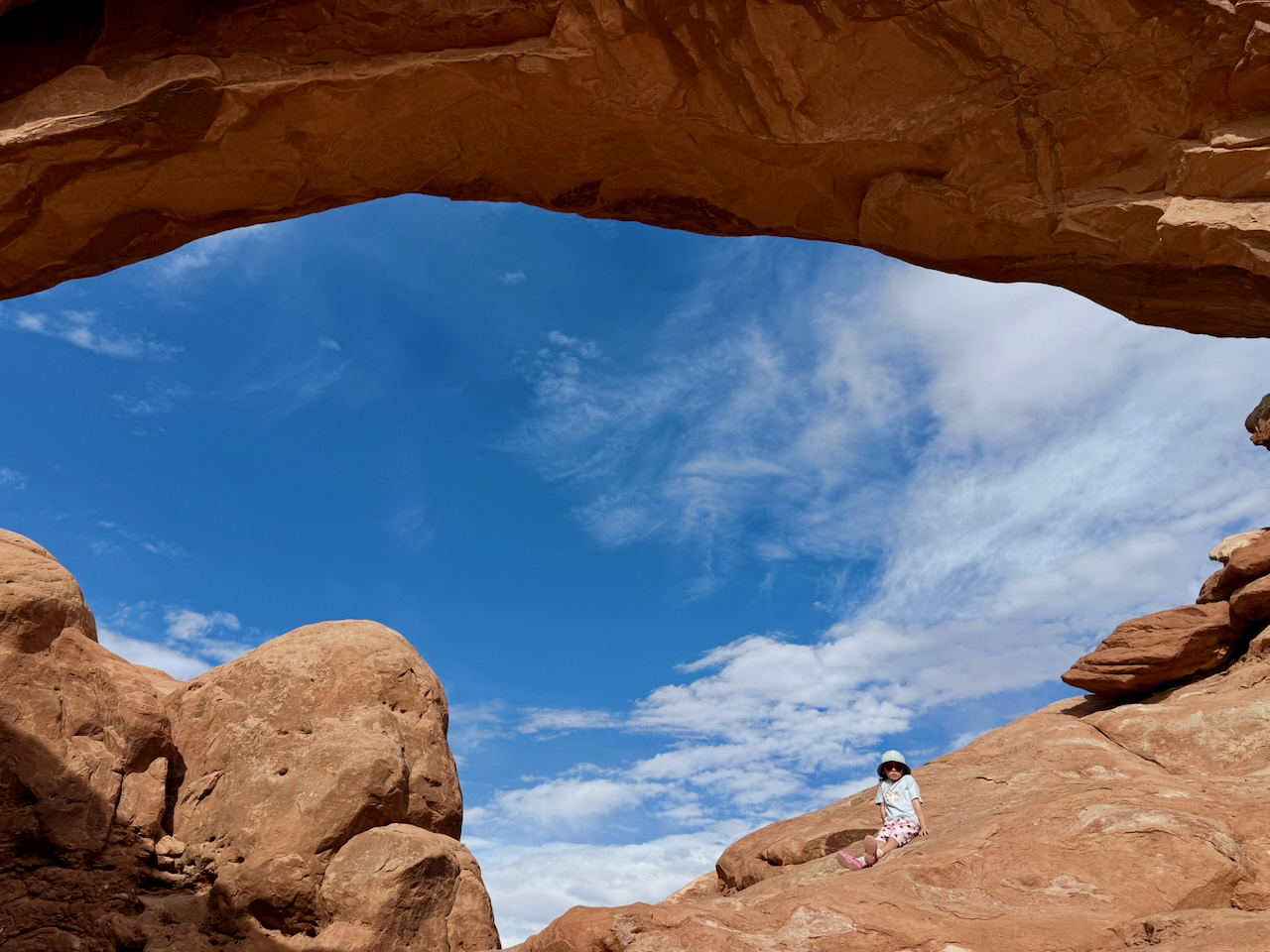
What I liked about this area is that the trails are relatively short, and you get to see multiple beautiful formations without committing to another strenuous hike. Nearby Double Arch is another popular stop if you have the time and energy.
Between Delicate Arch, Park Avenue, Balanced Rock, the petroglyphs, and The Windows, we had a full day of exploring Arches National Park.
Dinner in Moab: Trailhead Public House & Eatery
After spending the day at Arches, we headed back to downtown Moab for dinner at The Trailhead Public House & Eatery.

We ordered burgers and, of course, bread pudding for dessert. And this was such a great meal!
Trailhead has a casual, family-friendly atmosphere with plenty of comfort food, making it a great place to eat after a long day of hiking. Their homemade bread pudding is one of the restaurant’s specialties, and I definitely recommend saving room for dessert.
You can find the menu and current hours on the Trailhead website.
Day 3: Canyonlands National Park With Kids
For our second full day in Moab, we drove to Canyonlands National Park. While Arches is famous for its unusual sandstone formations, Canyonlands offers a completely different experience, with massive canyons, dramatic overlooks, and incredible panoramic views.
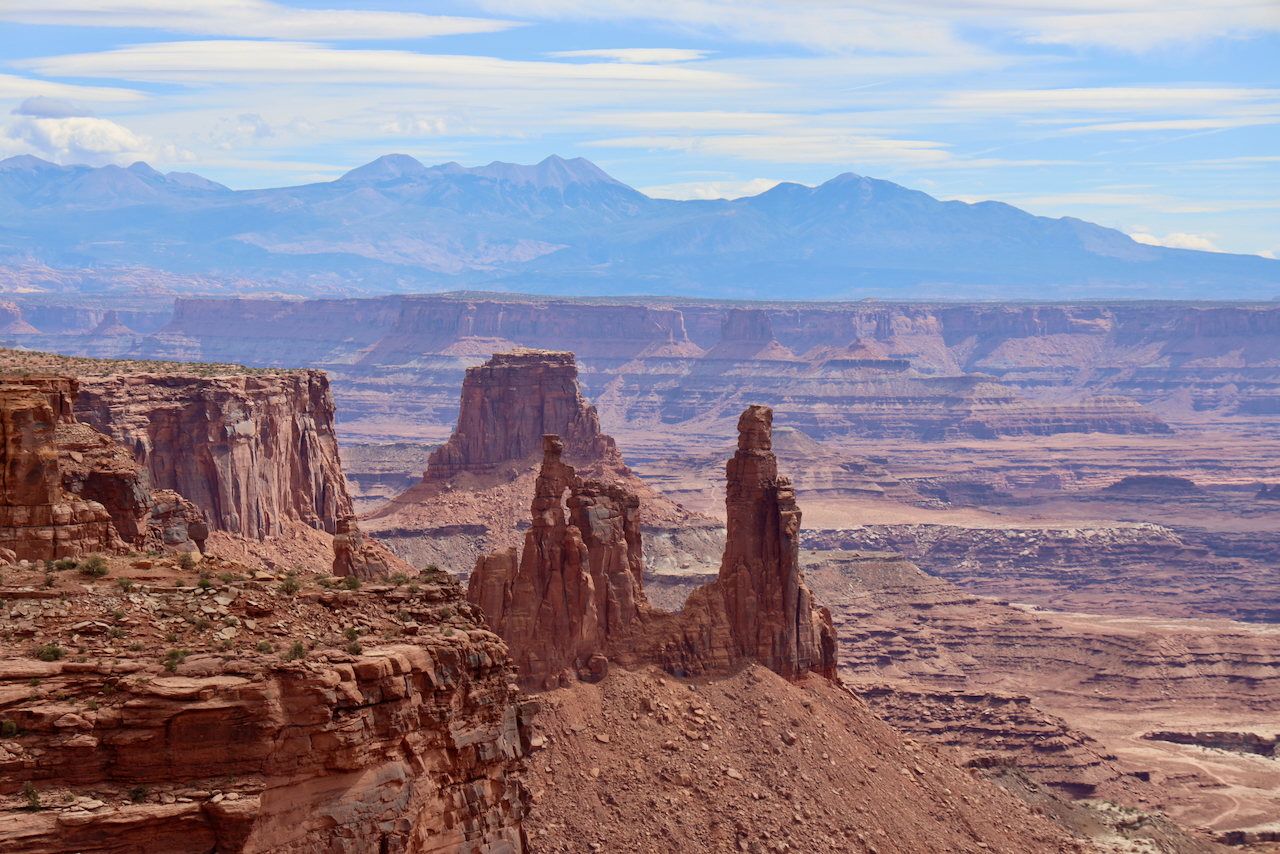
Canyonlands is divided into several districts, but we visited Island in the Sky, the easiest district to explore on a day trip from Moab.
It takes approximately 40 minutes to drive from Moab to the Island in the Sky Visitor Center. We spent the day exploring four trails, each offering a different perspective on the landscape.
Mesa Arch Trail, Canyonlands National Park
Our first hike was the famous Mesa Arch Trail. This is probably the most photographed location in Canyonlands National Park, especially at sunrise, when the underside of the arch glows orange.
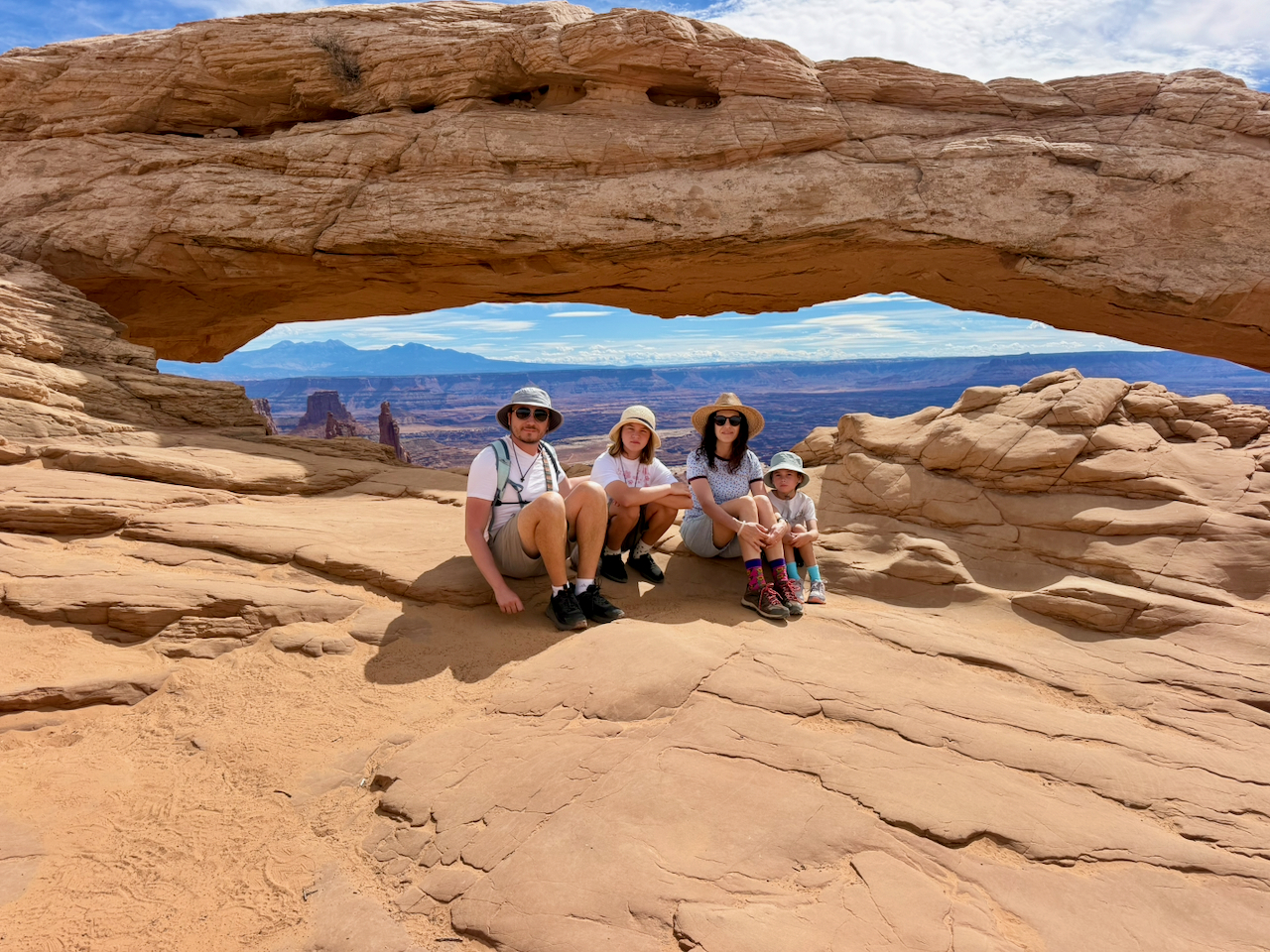
But you don’t have to visit at sunrise to enjoy it. The trail is short and relatively easy, leading to a natural stone arch framing an incredible view of the canyons below.
One important thing to know when visiting Mesa Arch with kids: the arch is located right near a steep cliff, and there are no safety railings.
Grand View Point Trail, Canyonlands National Park
Next, we explored the Grand View Point Trail, one of the most scenic walks in Canyonlands.
The trail follows the edge of the mesa, offering sweeping views across layers of canyons, cliffs, and the White Rim Road far below.
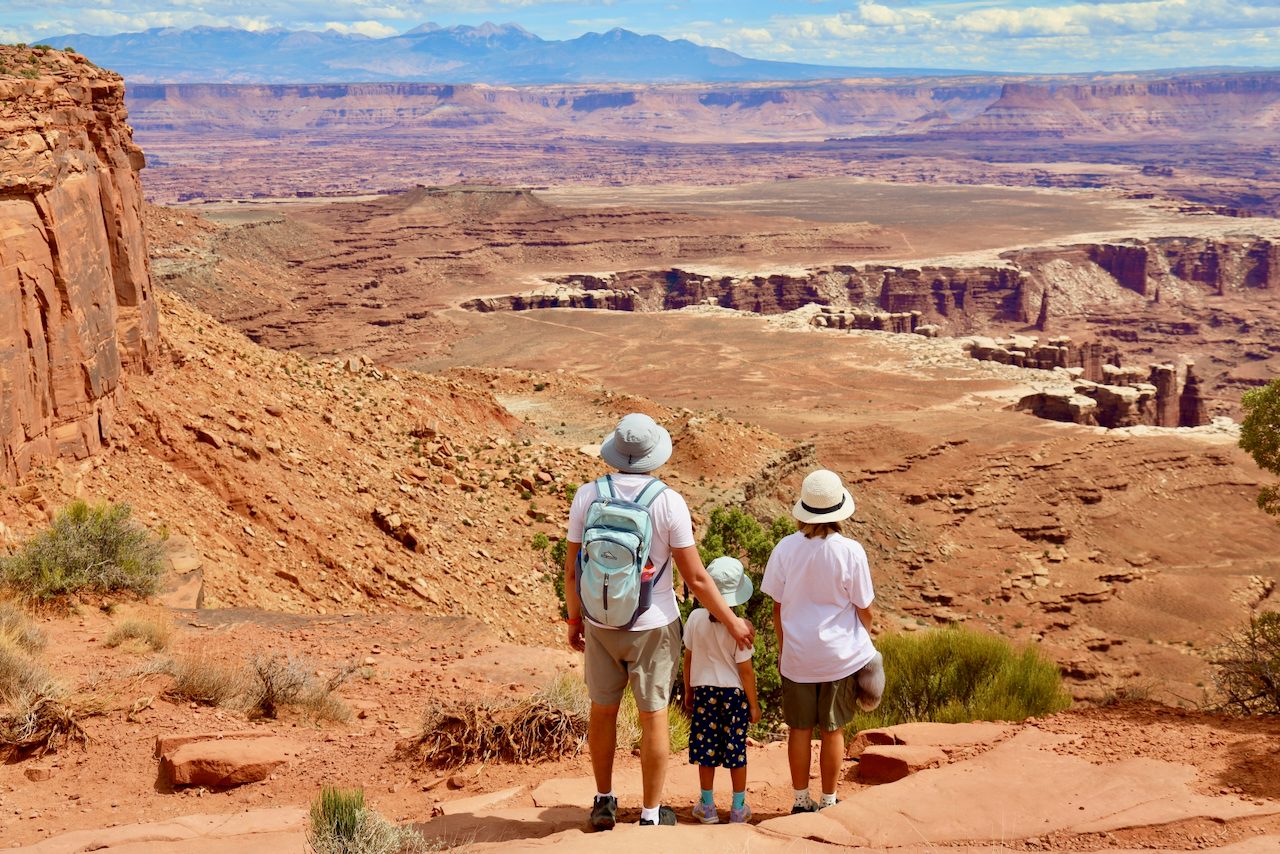
Even though the distance isn’t particularly long, the scenery makes it worth taking your time. There are plenty of places to stop and enjoy the view, and the panorama changes as you walk farther along the rim.
You can also enjoy spectacular views from the viewpoint near the parking lot if you don’t want to complete the entire hike. As with Mesa Arch, some sections are close to exposed canyon edges, so keep an eye on younger kids.
Upheaval Dome Overlook Trail, Canyonlands National Park
Another interesting stop was Upheaval Dome. Unlike the sweeping canyon views you’ll find throughout much of the park, Upheaval Dome looks like a massive crater surrounded by unusual layers of colorful rock.
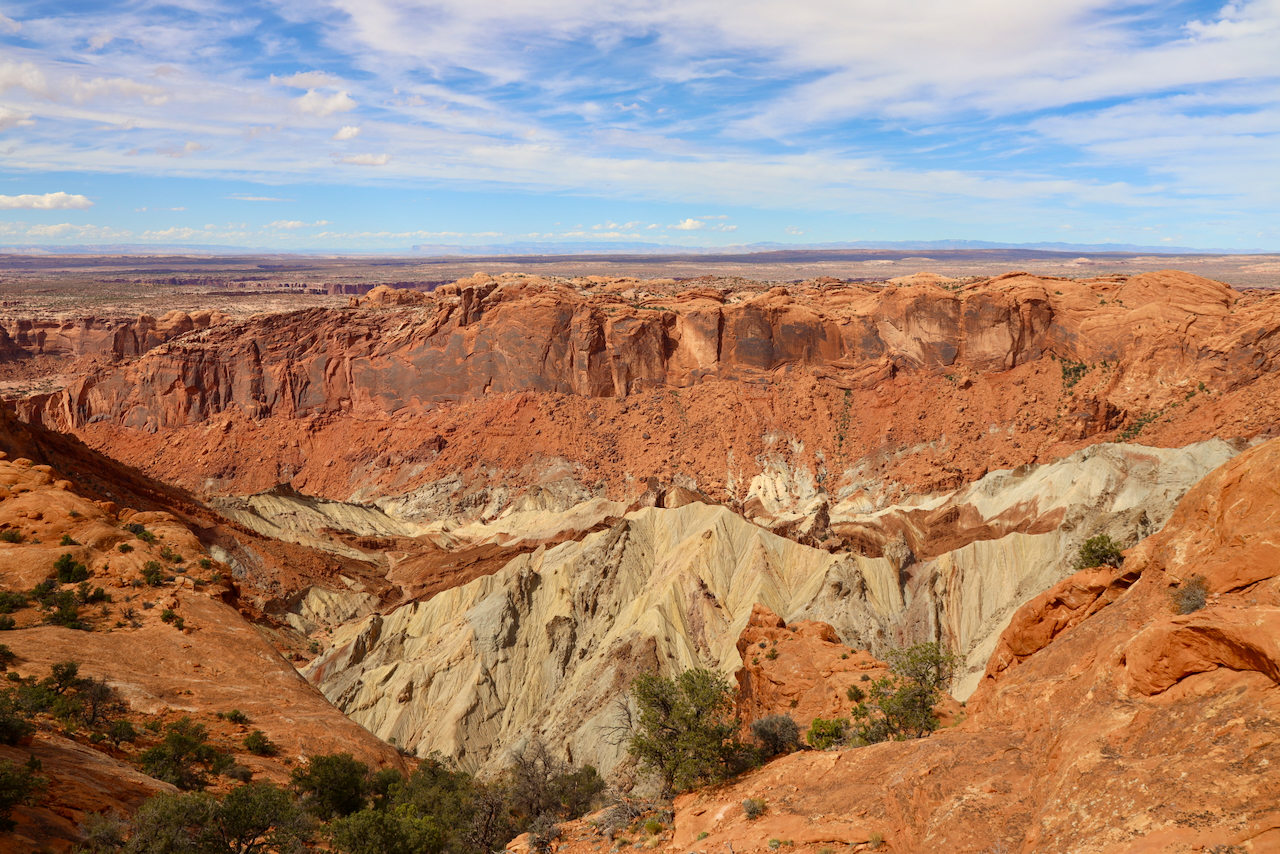
Scientists believe it was formed by a meteorite impact millions of years ago. The hike to the first overlook is short but relatively steep, with rocky steps and some uphill sections.
There’s also a second overlook for visitors who want to continue farther. This was a nice change from the other trails because the landscape looks completely different.
Whale Rock Trail, Canyonlands National Park
Our final hike in Canyonlands was Whale Rock, named after the enormous sandstone formation that resembles a whale.
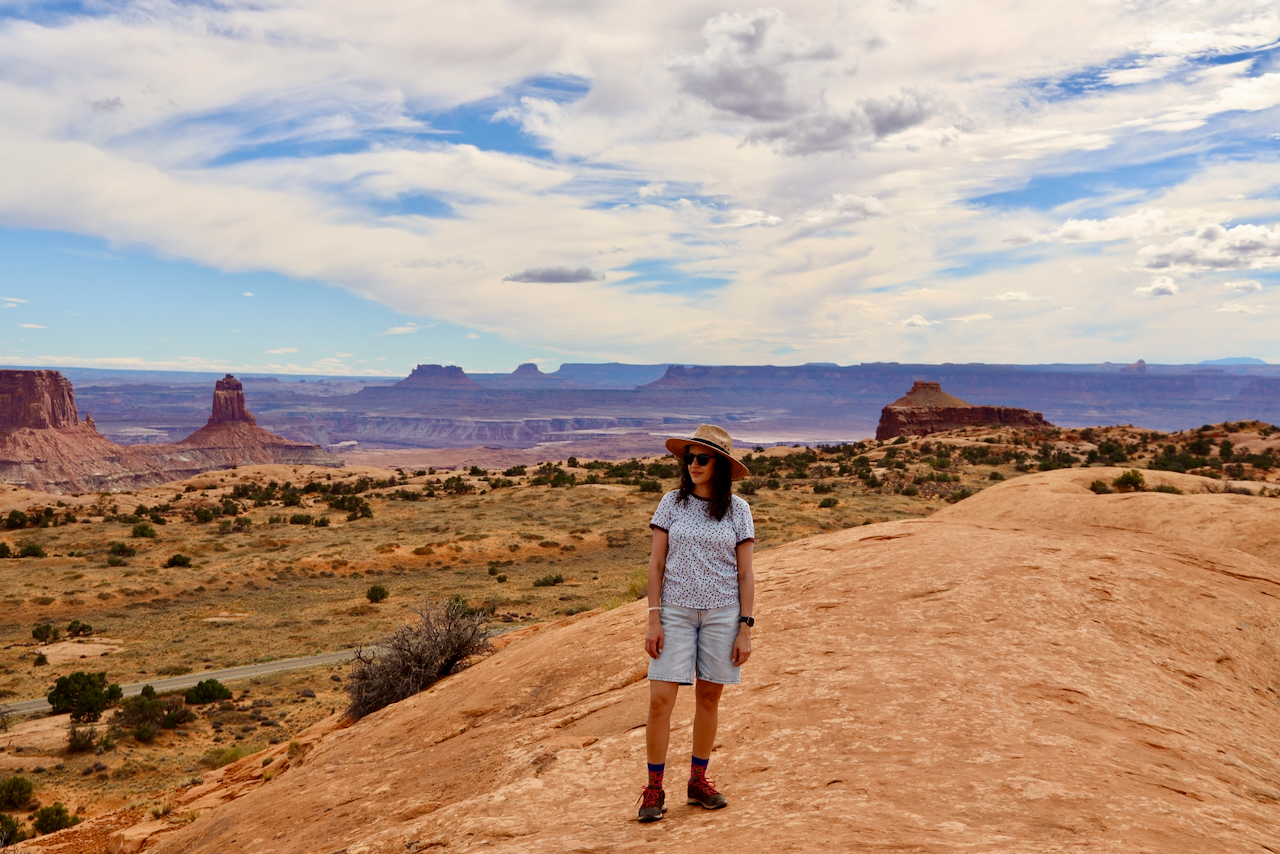
Unlike the mostly flat Mesa Arch Trail, this hike involves walking and scrambling up a large sandstone dome. It’s a fun trail for kids who enjoy climbing around on rocks, although be mindful of the steep drop-offs.
The views from the higher sections are beautiful, and it’s a relatively short adventure to add to your Canyonlands itinerary.
Between these four hikes, we were able to experience several very different parts of Island in the Sky in a single day.
And that was exactly what I wanted from our Moab trip: not just driving from viewpoint to viewpoint, but actually getting out and exploring with the kids.
Scenic Drive Along Potash Road and the Colorado River
After Canyonlands, we also explored Potash Road, one of the most beautiful scenic drives near Moab. Also known as Utah State Route 279 or the Lower Colorado River Scenic Byway, this road follows the Colorado River beneath towering sandstone cliffs.
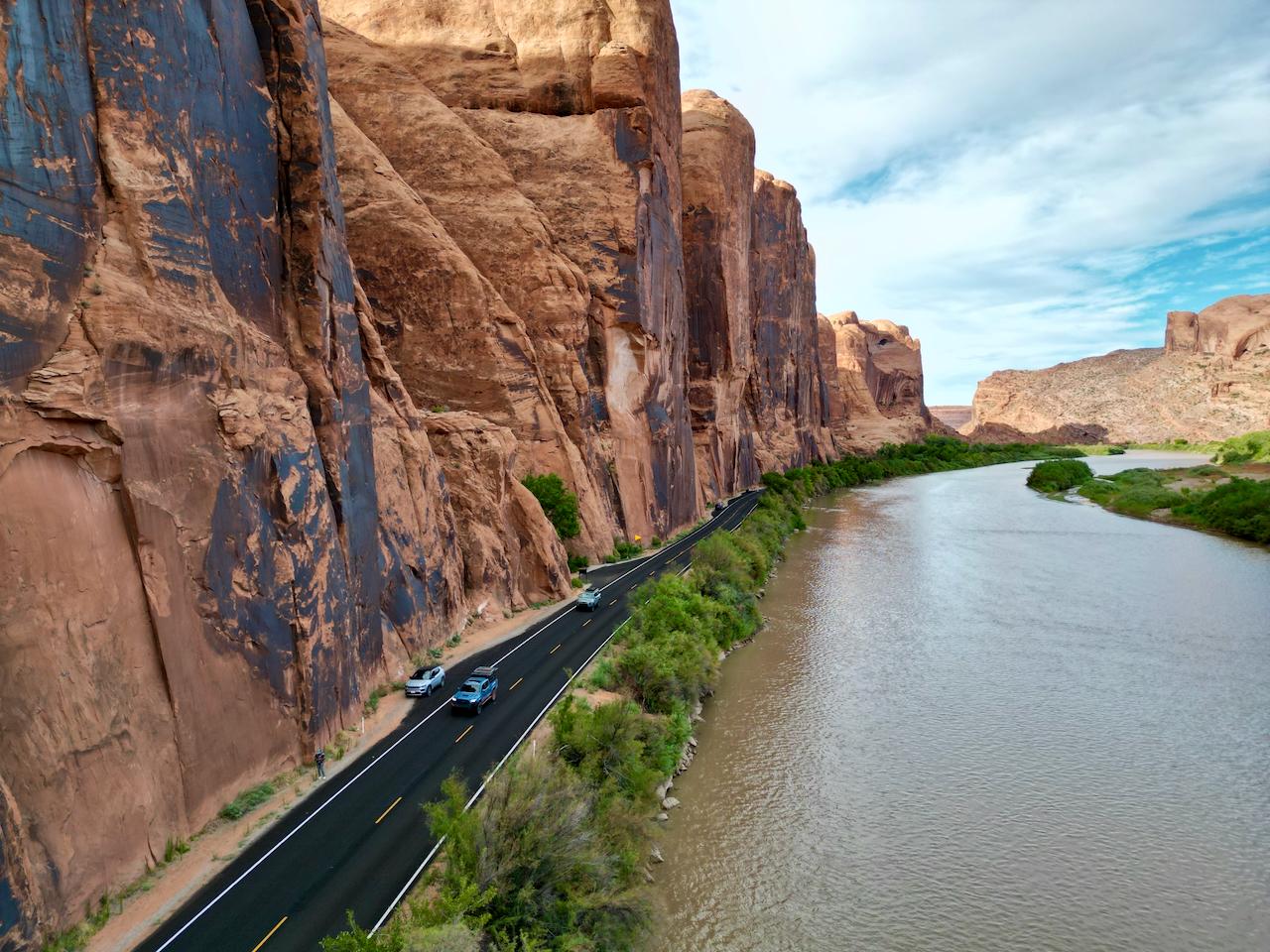
The scenery here is absolutely breathtaking. The enormous red rock walls rise almost vertically above the road, while the Colorado River flows right beside you. We stopped to take photos and captured some drone footage of the dramatic canyon walls.
If you’re visiting Moab, I highly recommend adding at least a portion of Potash Road to your itinerary, even if you don’t have time for another hike.
Along the paved section of the scenic byway, you can also find petroglyph panels, dinosaur tracks, and the trailhead for Corona Arch.
Important: The paved UT-279 scenic drive is accessible by regular car. However, the rough backcountry route connecting Canyonlands to Potash Road via Shafer Trail requires a suitable high-clearance four-wheel-drive vehicle and appropriate conditions.
Also, drones are prohibited inside Arches and Canyonlands National Parks. Check FAA airspace rules and local land-management restrictions before flying anywhere around Moab.
Dinner at Antica Forma in Moab
After our second full day of exploring, we headed back into town for dinner at Antica Forma, a popular Italian restaurant in Moab.
Antica Forma specializes in Neapolitan-style pizza, which sounded perfect after a day of hiking. We had pizza for dinner, a nice change from the burgers and American comfort food we’d enjoyed the previous evening.
If you’re looking for a family-friendly pizza restaurant in Moab, this is a great option. You can find the menu and hours on the Antica Forma website.
Day 4: Prehistoric Museum in Price on the Way Back to Salt Lake City
On our final morning, we checked out of Hyatt Place Moab and began driving back toward Salt Lake City Airport. But we had one more stop planned! We stopped at the USU Eastern Prehistoric Museum in Price, Utah, which is conveniently located along the route between Moab and Salt Lake City.
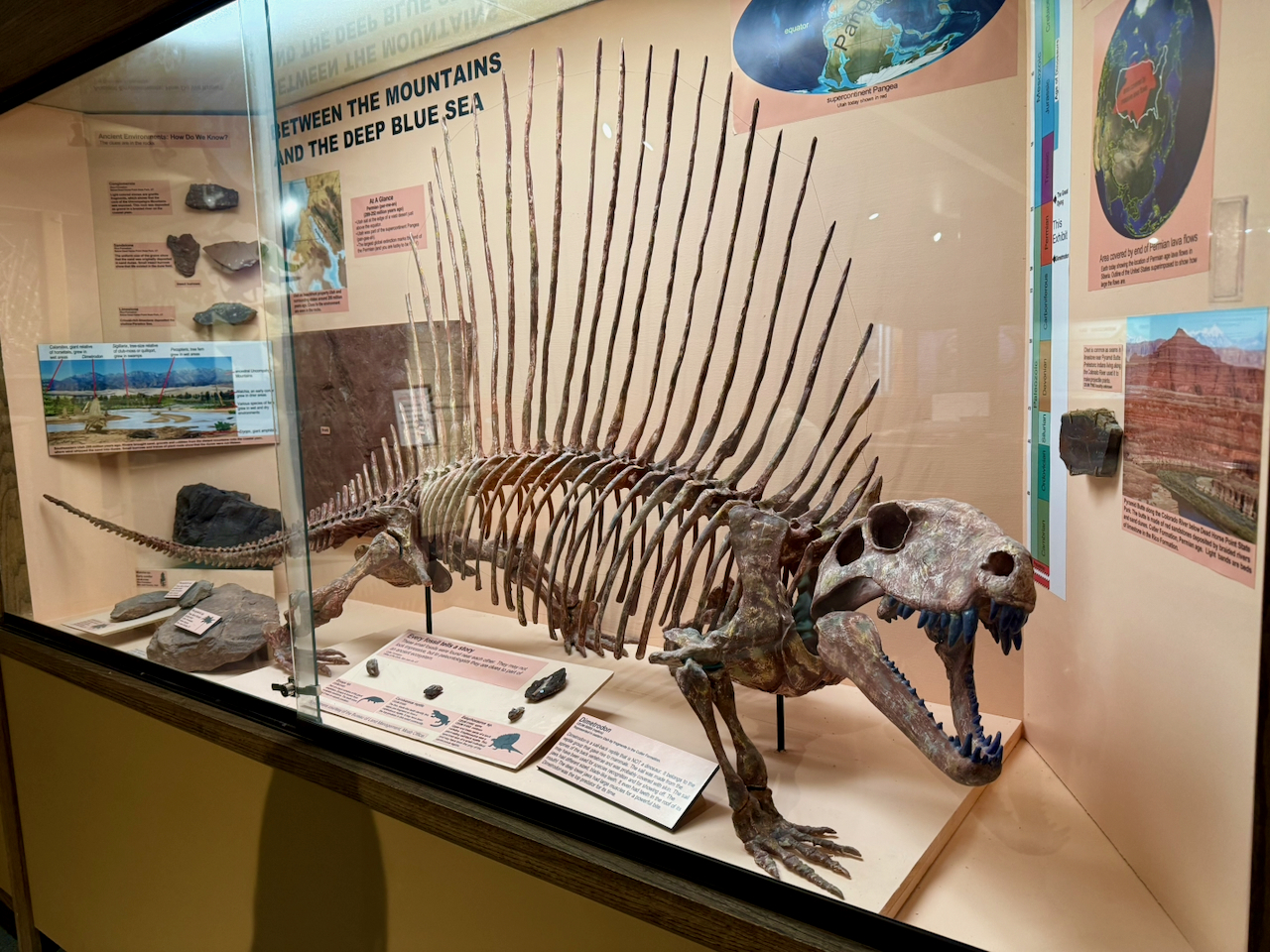
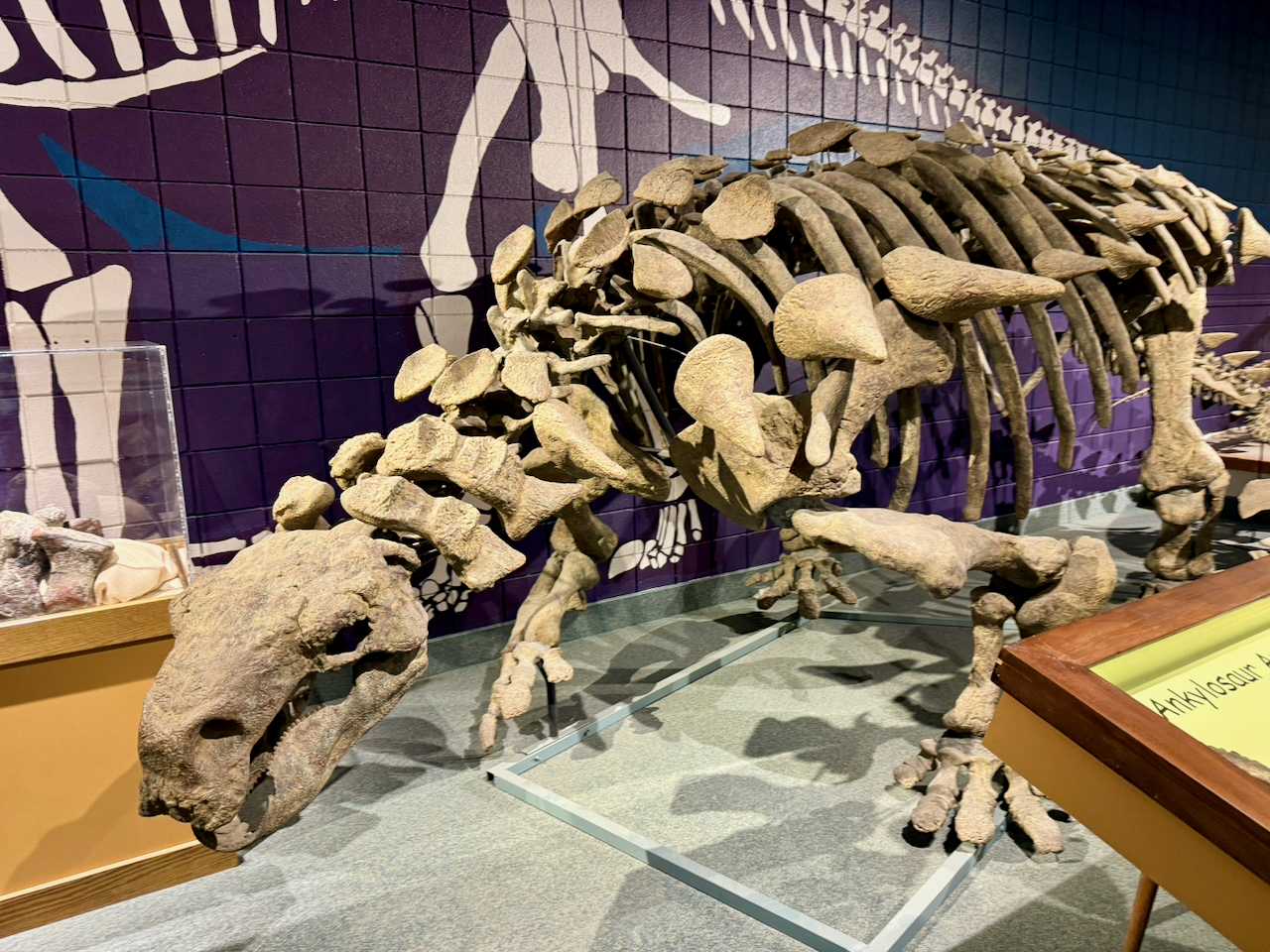
This is a great place to visit with kids, especially if you’ve already spent part of your trip exploring dinosaur footprints around Moab.
The museum focuses on paleontology, archaeology, and geology, with dinosaur fossils and exhibits about Utah’s prehistoric past. It’s also a nice indoor stop to break up the drive and learn more about the creatures that once lived in this part of the country.
You can find current admission prices and hours on the Prehistoric Museum website.
Just make sure to check the opening time before planning your stop around a flight. The museum currently opens at 9 a.m.
After the museum, we continued back toward Salt Lake City Airport for our flight home.
Practical Tips for Visiting Moab With Kids
After spending three nights in Moab and visiting both Arches and Canyonlands, here are a few things I would recommend for families planning a similar trip.
Plan at least one full day for each national park. While it’s technically possible to see parts of both parks in a single day, I wouldn’t recommend rushing through them with kids. Having a full day in each park gave us the flexibility to hike, stop for lunch, and enjoy the scenery.
Bring food into the parks. There are no restaurants along the main scenic routes inside Arches and Canyonlands. Pack sandwiches, snacks, and more water than you think you’ll need.
Start the more challenging hikes early. Delicate Arch is especially exposed, and temperatures can become dangerously hot during summer. We visited Moab in September, which is generally a comfortable season for hiking.
Don’t underestimate the short hikes. Some of our favorite stops were less than a mile long. Mesa Arch, Balanced Rock, Whale Rock, and The Windows are all excellent examples of places where you don’t need to hike for hours to see something memorable.
Download offline maps. Cell reception can be unreliable in the parks and on some of the remote roads around Moab.
Check Arches entry requirements before your trip. As of 2026, Arches National Park does not require advance timed-entry reservations, but this policy has changed over time. Check the official Arches National Park website before your visit.
Keep your kids close near canyon edges. Many viewpoints in Canyonlands have steep, unfenced drop-offs.
Moab Utah With Kids: Frequently Asked Questions
Is Moab, Utah Worth Visiting With Kids?
Absolutely! Moab is an excellent destination for families who enjoy outdoor adventures, hiking, dinosaurs, and beautiful scenery.
Between Arches National Park, Canyonlands National Park, dinosaur tracksites, and scenic drives, there are plenty of things to do with kids of different ages.
How Many Days Do You Need in Moab With Kids?
I recommend spending at least two full days in Moab, with one day dedicated to Arches National Park and another to Canyonlands National Park.
We stayed for three nights, which gave us two full sightseeing days plus time to explore dinosaur tracksites on our arrival day.
If you have three or four full days, you can also add Dead Horse Point State Park, Corona Arch, Moab Giants Dinosaur Park, or a family-friendly Colorado River activity.
Can Kids Hike to Delicate Arch?
Yes, children who are comfortable with longer hikes may be able to complete the three-mile round-trip Delicate Arch Trail.
However, the hike is strenuous, with a significant uphill climb, very little shade, and exposed sections. It’s important to consider your children’s hiking ability, the weather, and the time of day.
For younger children or families who prefer an easier option, the Delicate Arch Viewpoints offer a way to see the famous arch from a distance.
Which Is Better With Kids: Arches or Canyonlands?
I wouldn’t skip either one! Arches National Park has some of Utah’s most recognizable rock formations, including Delicate Arch, Balanced Rock, and The Windows.
Canyonlands National Park, particularly Island in the Sky, has incredible panoramic views and several relatively short hiking trails. If you only have one day, I would prioritize Arches. But with two full days in Moab, I highly recommend visiting both.
What Is the Best Time to Visit Moab With Kids?
Spring and fall are generally the best times to visit Moab, particularly April, May, September, and October. Summer can be extremely hot, often exceeding 100°F, which makes longer hikes more challenging and potentially dangerous.
Bottom line
Looking back, three nights in Moab gave us a great introduction to this part of Utah. We spent one full day exploring Arches National Park, another hiking in Canyonlands, stopped to see dinosaur tracks, drove along the Colorado River, and even visited a prehistoric museum on the way back to the airport.
And staying in a spacious two-bedroom casita at Hyatt Place Moab made the trip even more comfortable for our family.
If you’re planning a Moab Utah itinerary with kids, I would absolutely recommend making time for both national parks. They offer very different experiences, and together they make a fantastic family trip filled with hiking, dinosaurs, and some of the most beautiful scenery in the American Southwest.


